
Lunar Calendar Vs Solar Calendar
Lunar Calendar Vs Solar Calendar - Compare accuracy & uses today. Measures the year by earth’s orbit — 365/366 days,. Each year, the same date in the lunar calendar falls earlier in the solar year. Explore the math behind global calendars. Much like the difference between solar and lunar years, a lunar calendar is based on the cycle of the moon, while a solar calendar is based on the position of the sun and corresponding. A lunar calendar is a calendar whose months record the cycles of the moon 's phases (synodic months, lunations).
While a lunar year is based on the cycles of the moon and is shorter in length, a solar year is based on the earth's orbit around the sun and is more accurate in tracking time. A lunar calendar is a calendar whose months record the cycles of the moon 's phases (synodic months, lunations). Learn how lunar calendars follow the moon’s cycle, why they differ from solar calendars, and how cultures balance the rhythms of moon and sun to measure time. A lunar month is roughly 29.5 days, which means a year of 12 lunar months totals about 354 days. Much like the difference between solar and lunar years, a lunar calendar is based on the cycle of the moon, while a solar calendar is based on the position of the sun and corresponding.

Gregorian Calendar Vs Lunar Calendar prntbl.concejomunicipaldechinu
Much like the difference between solar and lunar years, a lunar calendar is based on the cycle of the moon, while a solar calendar is based on the position of the sun and corresponding. While a lunar year is based on the cycles of the moon and is shorter in length, a solar year is based on the earth's orbit.

Lunar calendar Chopwa shop
Compare accuracy & uses today. While a lunar year is based on the cycles of the moon and is shorter in length, a solar year is based on the earth's orbit around the sun and is more accurate in tracking time. A lunar month is roughly 29.5 days, which means a year of 12 lunar months totals about 354 days..

Lunar Calendar vs Solar Calendar
A lunar calendar is a calendar whose months record the cycles of the moon 's phases (synodic months, lunations). This in contrast to solar calendars, whose annual cycles are based on the solar year. That is about 11 days shorter than a solar. Because 354 days is shorter than a solar year (about 365.25 days), a lunar calendar drifts relative.

Solar Calendar Vs Lunar Calendar Google Calendar Tips
Learn how solar calendars stay aligned with seasons while lunar calendars track moon phases. Much like the difference between solar and lunar years, a lunar calendar is based on the cycle of the moon, while a solar calendar is based on the position of the sun and corresponding. Measures months by the moon’s phases — each month has 29 or.
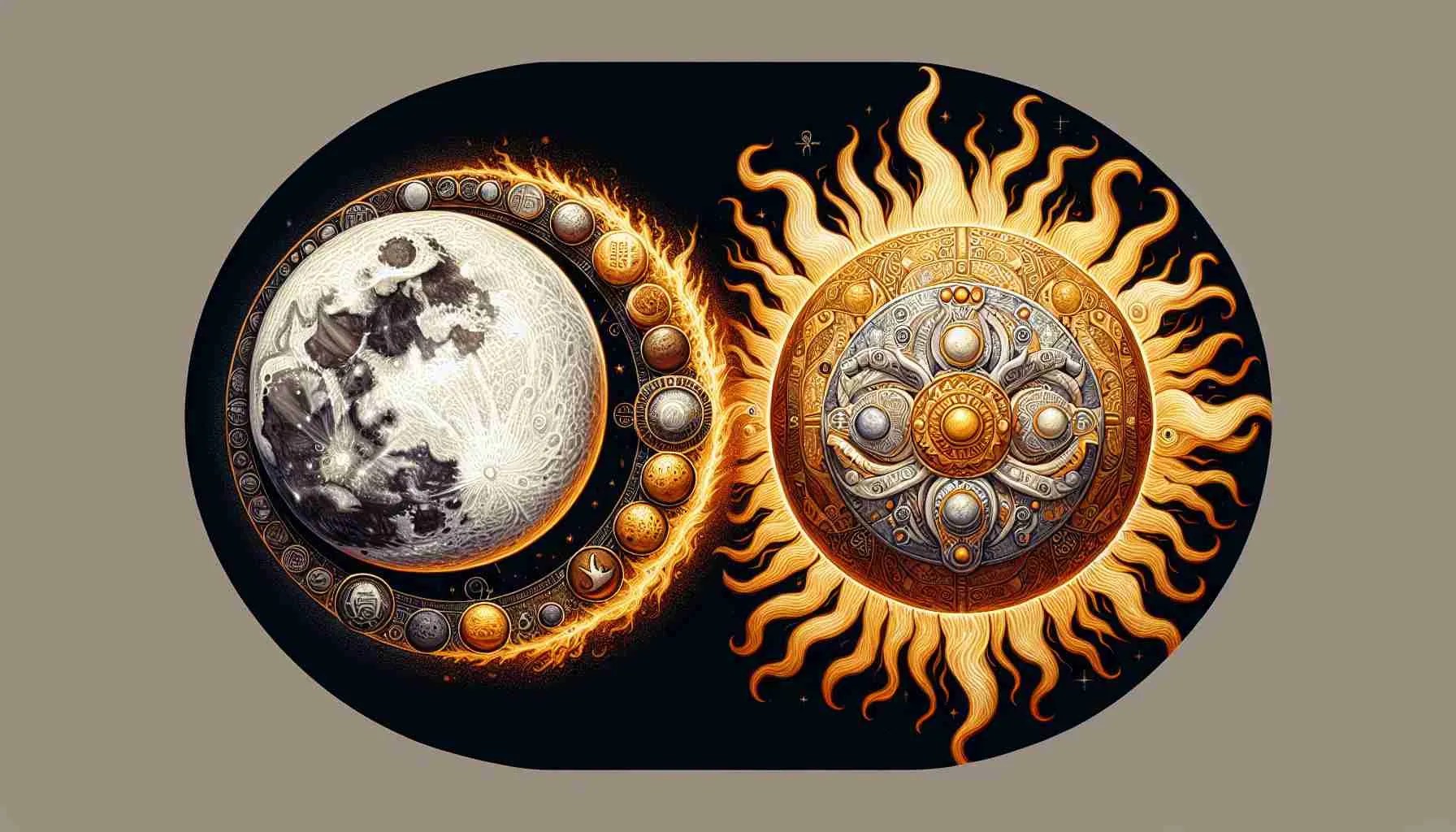
Sun vs. Moon Unveiling the Mysteries of Solar and Lunar Calendars
This free online tool converts dates between the solar (gregorian) calendar and the lunar calendar used in chinese, vietnamese, korean, and other east asian cultures. Measures the year by earth’s orbit — 365/366 days,. Because 354 days is shorter than a solar year (about 365.25 days), a lunar calendar drifts relative to the seasons. Compare accuracy & uses today. While.
Lunar Calendar Vs Solar Calendar - Much like the difference between solar and lunar years, a lunar calendar is based on the cycle of the moon, while a solar calendar is based on the position of the sun and corresponding. A lunar calendar is a calendar whose months record the cycles of the moon 's phases (synodic months, lunations). Measures the year by earth’s orbit — 365/366 days,. This in contrast to solar calendars, whose annual cycles are based on the solar year. Lunar calendars follow the phases of the moon. Solar calendar vs lunar calendar explained:
Solar calendar vs lunar calendar explained: Much like the difference between solar and lunar years, a lunar calendar is based on the cycle of the moon, while a solar calendar is based on the position of the sun and corresponding. A lunar month is roughly 29.5 days, which means a year of 12 lunar months totals about 354 days. Explore the math behind global calendars. Measures the year by earth’s orbit — 365/366 days,.
Because 354 Days Is Shorter Than A Solar Year (About 365.25 Days), A Lunar Calendar Drifts Relative To The Seasons.
That is about 11 days shorter than a solar. This free online tool converts dates between the solar (gregorian) calendar and the lunar calendar used in chinese, vietnamese, korean, and other east asian cultures. Explore the math behind global calendars. Solar calendar vs lunar calendar explained:
Lunar Calendars Follow The Phases Of The Moon.
Each year, the same date in the lunar calendar falls earlier in the solar year. Compare accuracy & uses today. While a lunar year is based on the cycles of the moon and is shorter in length, a solar year is based on the earth's orbit around the sun and is more accurate in tracking time. A lunar calendar is a calendar whose months record the cycles of the moon 's phases (synodic months, lunations).
Measures The Year By Earth’s Orbit — 365/366 Days,.
Measures months by the moon’s phases — each month has 29 or 30 days and begins at the new moon. Understand the difference between the solar (gregorian) and lunar (hijri) years and how the leap year system corrects for the earth's orbit. Learn how solar calendars stay aligned with seasons while lunar calendars track moon phases. A lunar month is roughly 29.5 days, which means a year of 12 lunar months totals about 354 days.
Much Like The Difference Between Solar And Lunar Years, A Lunar Calendar Is Based On The Cycle Of The Moon, While A Solar Calendar Is Based On The Position Of The Sun And Corresponding.
Learn how lunar calendars follow the moon’s cycle, why they differ from solar calendars, and how cultures balance the rhythms of moon and sun to measure time. This in contrast to solar calendars, whose annual cycles are based on the solar year.